One drug claim, two pathways, one prescribing question
Before you look at the data, make a prediction: if a therapy acts on both lipid handling and vascular inflammation, what kind of outcome would convince you it matters clinically—better lab numbers, or fewer hard cardiovascular events?
Select the outcome you would trust most. Then compare your instinct with the trial result that drove Cardioxil's positioning.
What's in this lesson
You will move through the same sequence a prescriber would: identify the right patient, connect mechanism to effect, interpret the ARMOR trial, apply dose-modification rules, and weigh benefit-risk-access in a clinical recommendation.
Why this matters
Product documents often mix mechanism, efficacy, safety, and access claims. The real skill is not memorizing each section—it is integrating them into a coherent prescribing decision without overvaluing a single metric.
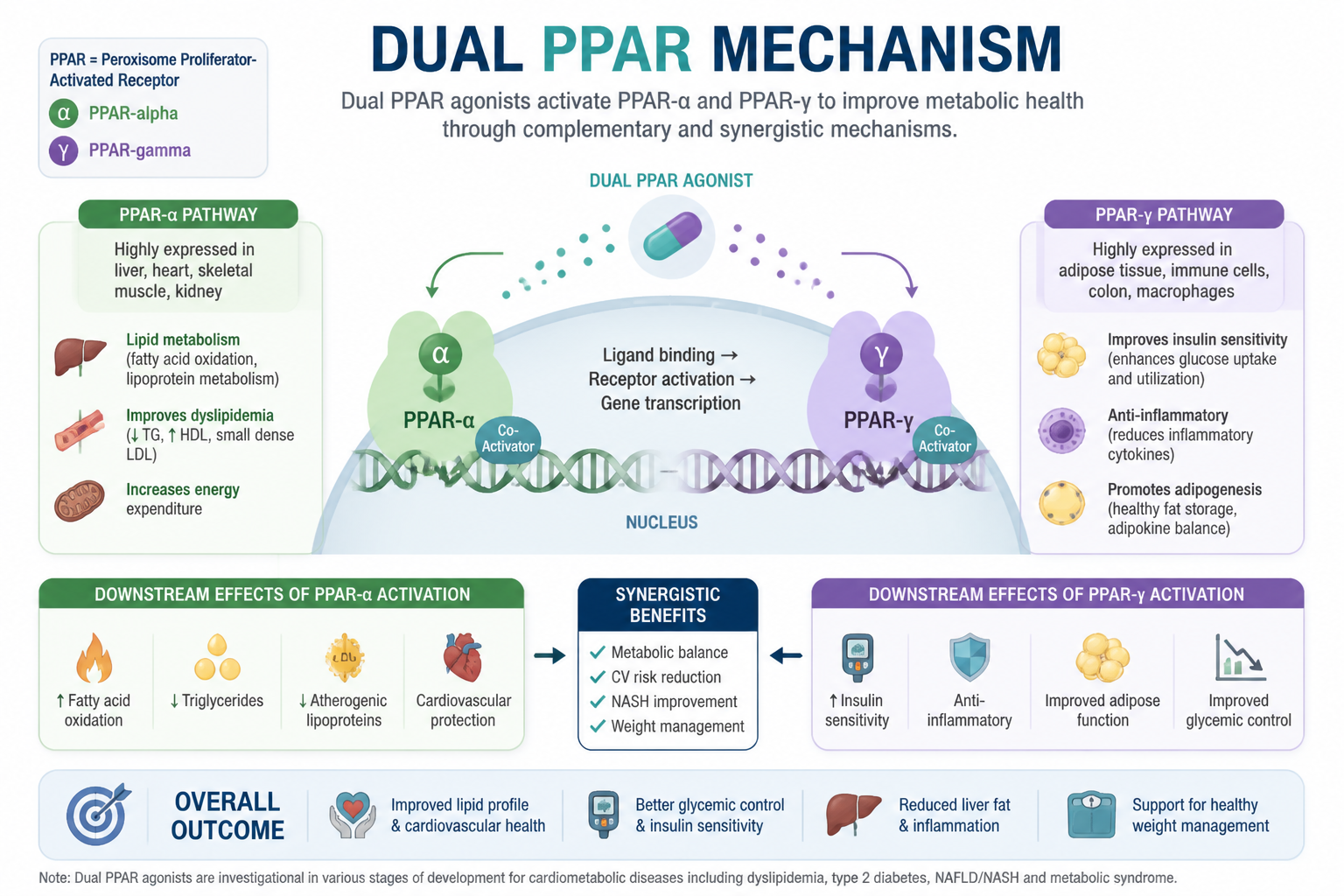
Cardioxil is framed as a dual-action therapy: hepatic lipid metabolism on one side and endothelial inflammation control on the other.
Who actually fits the document's indication?
Cardioxil is presented for adults with established ASCVD or multiple cardiovascular risk factors who are already on diet management and maximally tolerated statin therapy. That means eligibility depends on both risk profile and treatment context.
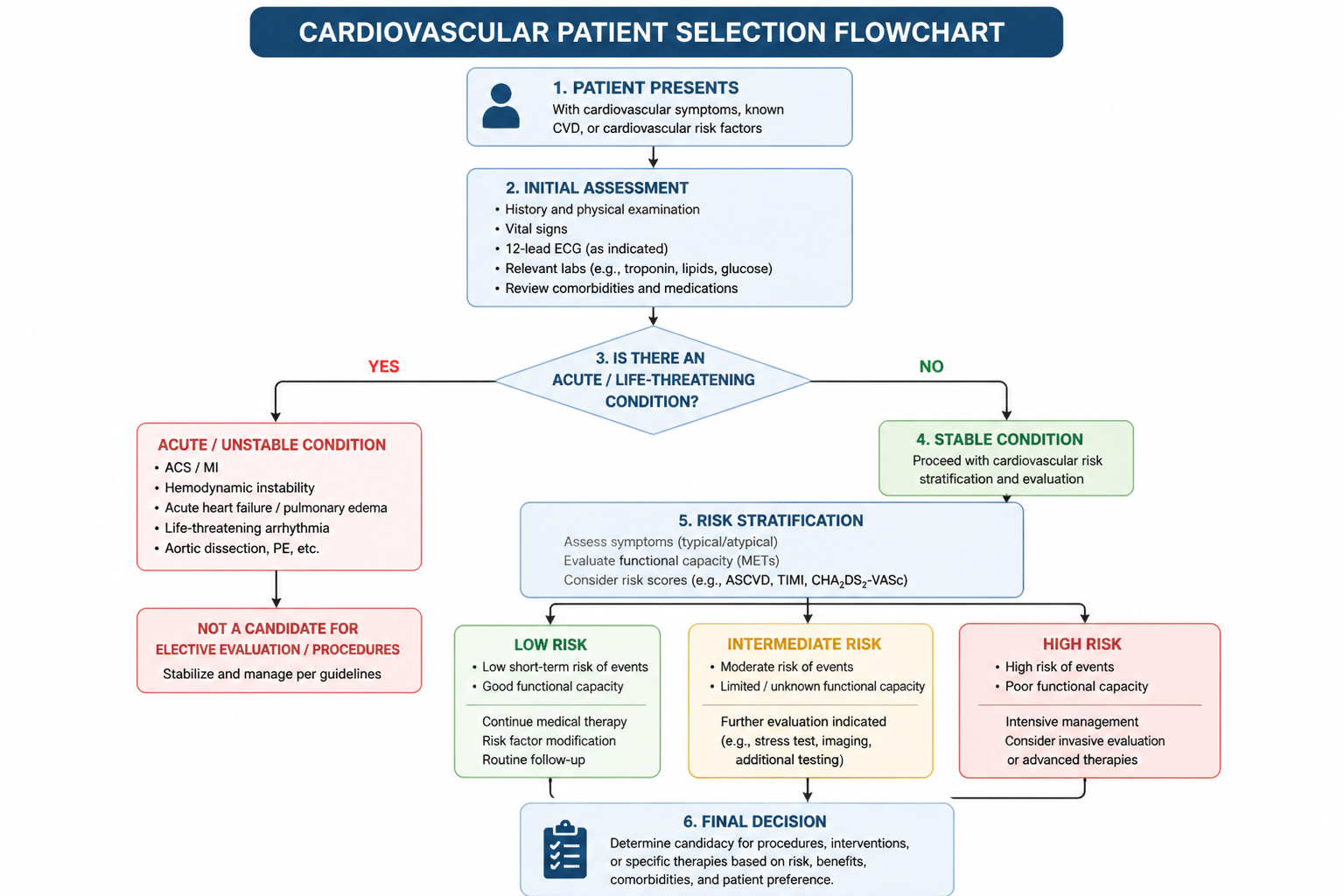
The indication reads like a filter: risk, current statin status, contraindications, then monitoring plan.
Prescribing signal
If a patient is high-risk but has severe hepatic impairment or advanced uncontrolled heart failure, the contraindication overrides the benefit argument.
Choose the strongest Cardioxil candidate
Click the patient profile that best fits the document's indication without triggering a listed contraindication.
Map each pathway to the effect it is supposed to explain
The document links PPAR-alpha activity in hepatocytes to increased fatty-acid beta-oxidation and lower triglyceride burden. It separately links partial PPAR-gamma modulation in endothelial cells to suppression of NF-kB signaling and lower vascular inflammation without marked adipogenesis.
PPAR-alpha activity
Partial PPAR-gamma modulation
Cardiovascular protection
Use the static pathway diagram first to orient yourself, then the motion clip to reinforce that the document describes two distinct biological routes converging on one clinical goal.
Why the mechanism matters
A learner should be able to explain why the document claims both lipid effects and vascular-inflammatory effects—not just repeat the receptor names.
Read the ARMOR trial as an outcomes story, not just a percentage claim
In the Phase III ARMOR trial of 7,200 patients, Cardioxil plus standard care reduced major adverse cardiovascular events at 36 months from 9.3% to 6.5%. The document highlights a 30% relative risk reduction, but the raw event difference matters too.
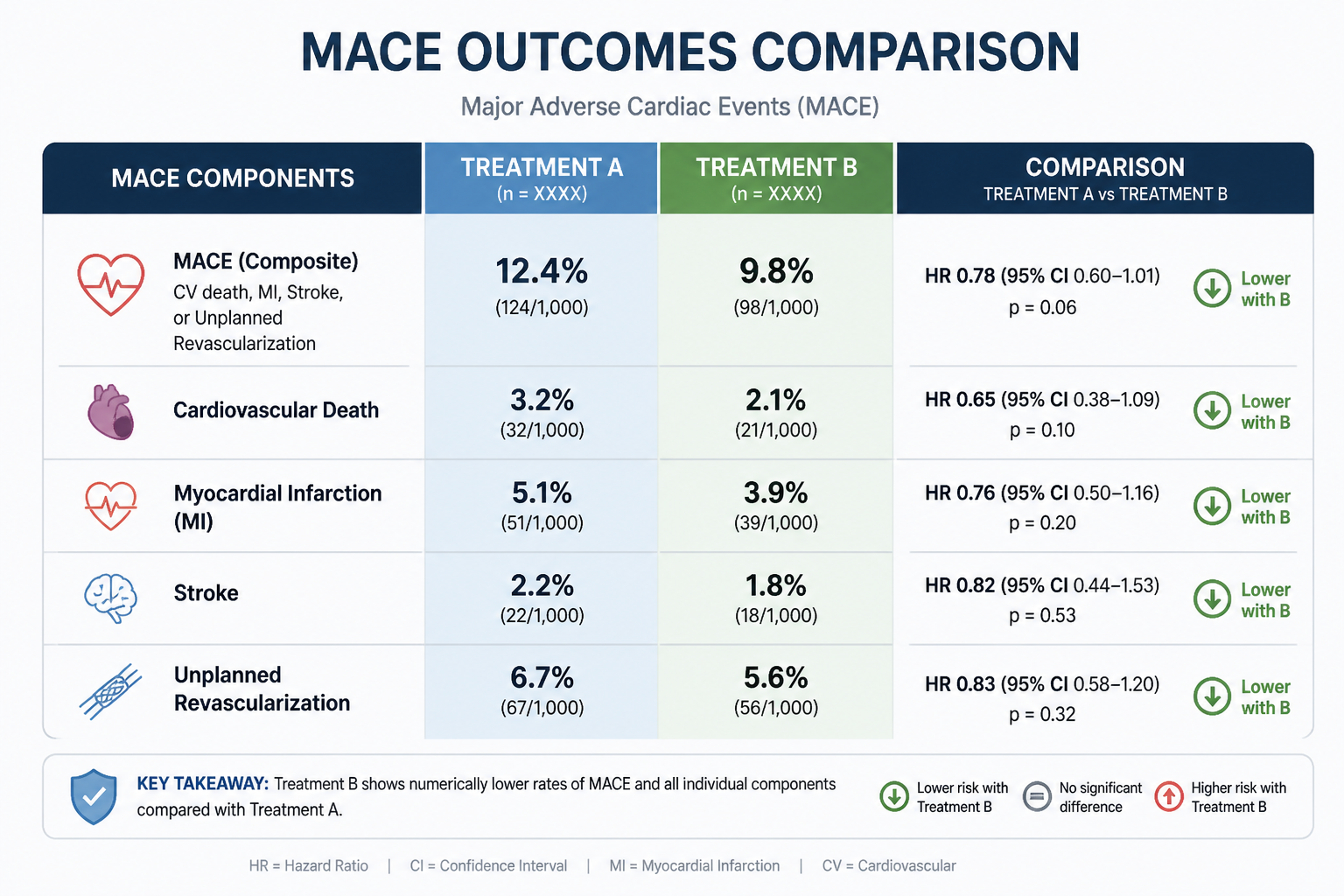
The document's efficacy claim is strongest when learners can move between relative framing and actual event counts.
Match the pathway to the effect
Select one pathway, then select the effect that best fits it. You need both pairs correct.
Pathways
Effects
Management depends on how serious the adverse event is
The standard dose is 50 mg once daily with or without food. The document then shifts from prescribing to triage: continue, withhold, reduce to 25 mg, or discontinue depending on severity and event type.
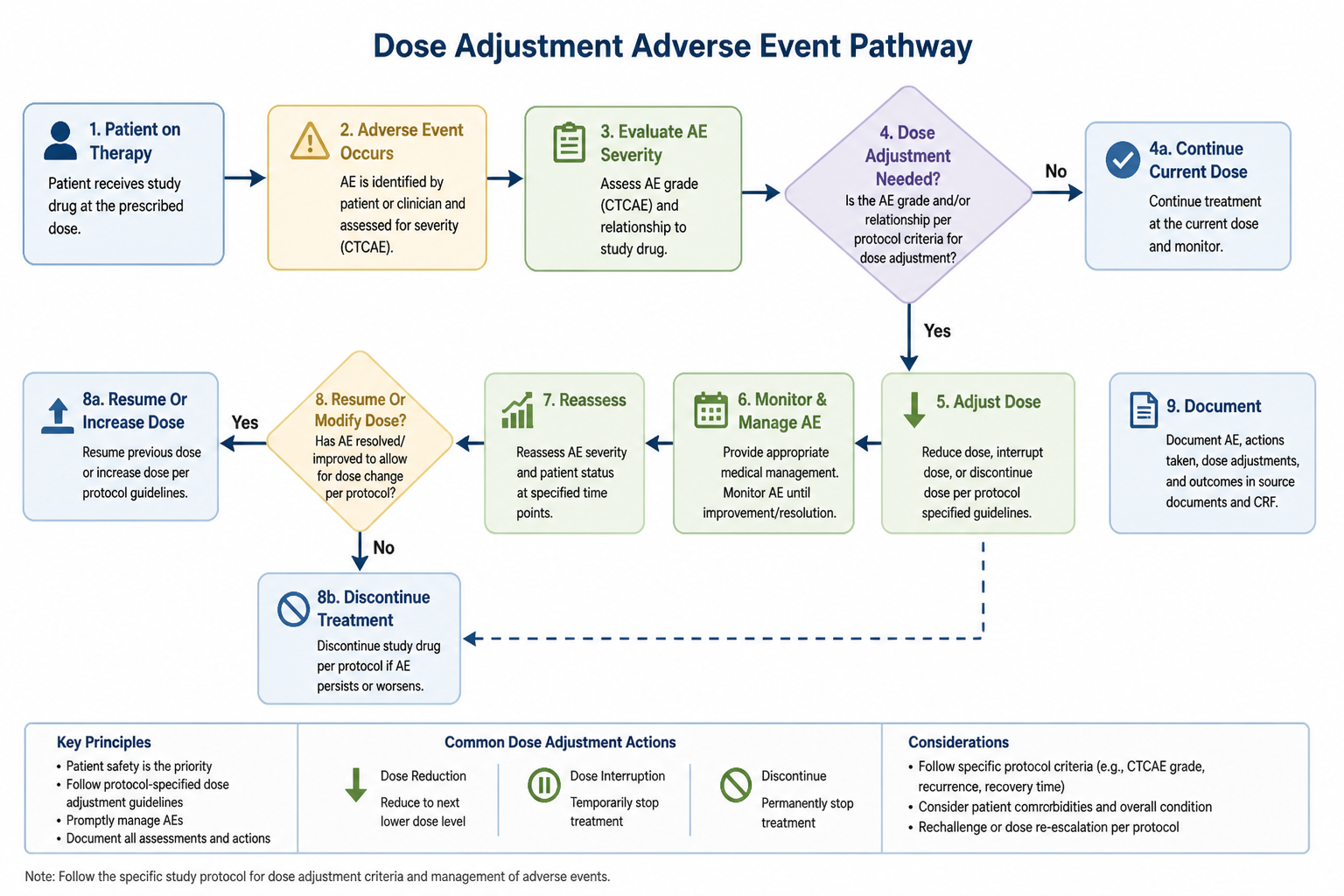
The key mental move is not recalling a single side effect—it is classifying severity and choosing the corresponding management action.
This clip emphasizes that dose modification is a decision pathway with branching outcomes, not a static table.
Pick the right management action
A patient on Cardioxil develops ALT greater than three times the upper limit of normal with symptoms. Click the best next step based on the document's logic.
A recommendation is only credible if it balances efficacy, safety, and practical access
Cardioxil is not described as a pure efficacy story. The document also highlights common but usually manageable adverse events, contraindications, monitoring, formulary coverage, expected Medicare access, copay support, starter packs, and hotline assistance.
Benefit
Reduced MACE, cardiovascular death, non-fatal MI, non-fatal stroke, plus secondary improvement in LDL-C, hs-CRP, and endothelial function.
Risk
Screen hepatic impairment, uncontrolled advanced heart failure, hypersensitivity, renal caution, fluid retention, and liver-enzyme changes.
Access
Coverage and support logistics can affect uptake, persistence, and real-world feasibility even when the clinical case is strong.
The practical implementation story matters because a treatment recommendation lives at the intersection of effect size, safety work, and access.
Complete the recommendation sentence
Type the missing phrase: Cardioxil should be considered for high-risk adults who are already on ________ and who do not have major listed contraindications.
Summary: the five decisions that matter most
1. Fit
Cardioxil is positioned for high-risk adults with ASCVD or multiple risk factors already on diet management and maximally tolerated statin therapy.
2. Mechanism
The document ties PPAR-alpha to lipid handling and partial PPAR-gamma modulation to lower vascular inflammation.
3. Evidence
ARMOR reduced MACE from 9.3% to 6.5% over 36 months, which is both a 30% relative reduction and a 2.8-point absolute reduction.
4. Safety
Use severity-based management: continue, withhold, reduce to 25 mg, or discontinue depending on the adverse event and warning signs.
5. Recommendation quality
A strong recommendation integrates efficacy, contraindications, monitoring workload, tolerability, and access support instead of focusing on any single claim in isolation.
Ready for the scored assessment?
You will answer five questions. Each has exactly four options, and you will see your score only at the end. Use the lesson evidence, not guesswork: eligibility depends on indication plus contraindications, trial interpretation requires both relative and absolute thinking, and safety questions hinge on severity-based management.
Instructions
- Choose one answer per question.
- You can move forward only after answering the current assessment question.
- No per-question feedback appears during the scored assessment.
- You need 80% or higher to earn the certificate.
Your assessment result
Complete all five questions to see your result.
Great work. Enter your name to generate a printable certificate.
You need 80% to pass. Review the lesson and try the assessment again.